In the middle of the rice fields of the Echigo Plain, a faint smell of sulfur drifts over a small hot spring town. This is Tsukioka Onsen in Shibata, Niigata Prefecture. Look into the bath and the water is such a vivid emerald green that you might think someone added bath salts. Locals call it the “inner parlor of Niigata”: it is only about 50 minutes by car from Niigata Station, yet the pace of life here is slow and relaxed.
In June 2026 I made a day trip to Tsukioka Onsen. In this guide I share how the bath felt, and also cover the water, the history, where to stay, what to eat, how to get there, and practical tips for visitors with tattoos or dietary restrictions.
- My visit
- Tsukioka Onsen at a glance
- The water: why it is green, and why your skin feels so soft
- History: they drilled for oil and found hot water
- Day-trip bathing: the Bijin-no-Izumi public bath
- Where to stay
- Walking the town and nearby sights
- Food: Niigata’s “Italian”, rice and sake
- Tips for your visit
- Getting there
- Sources
My visit
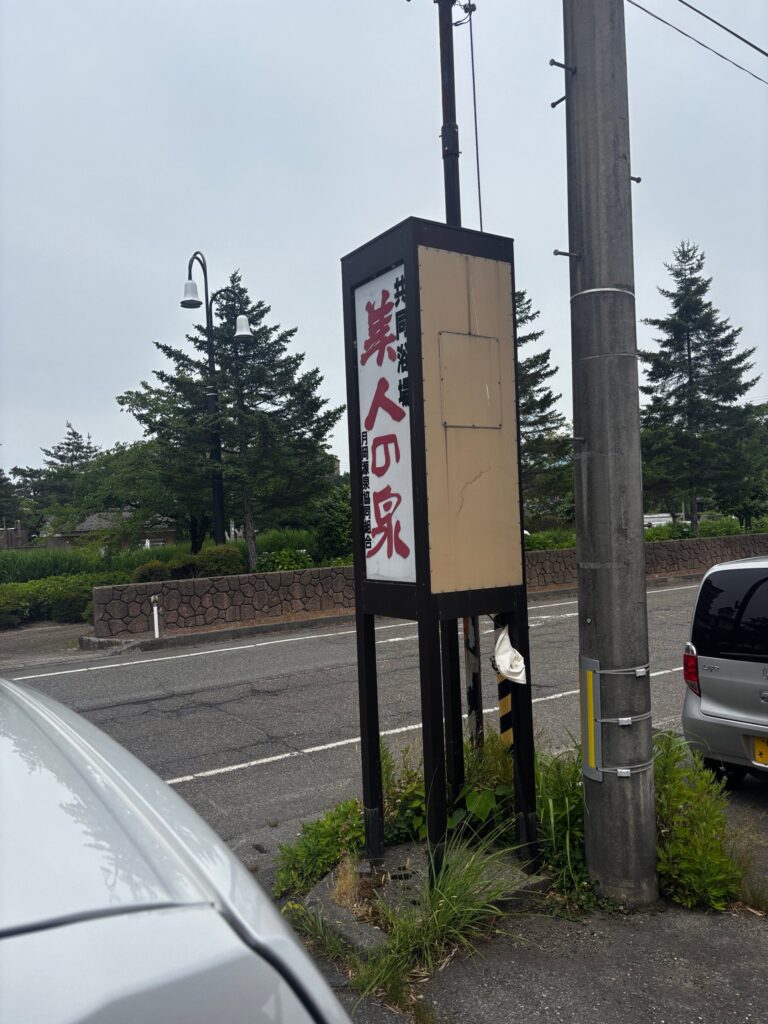
The water really is a beautiful emerald green, and it leaves your skin feeling soft and moist. I bathed at the public bath Bijin-no-Izumi (共同浴場 美人の泉, “Spring of Beauty”). The tub is small, but the water quality is so good that I left completely satisfied.
Bijin-no-Izumi is one street away from the main hot spring street, so it is a little off the main strip. The main street itself has a lot of atmosphere and is fun to walk around.
Tsukioka Onsen at a glance
| Address | Tsukioka Onsen, Shibata City, Niigata 959-2338 (新潟県新発田市月岡温泉) |
| Spring type | Sulfur-containing sodium chloride spring (含硫黄-ナトリウム-塩化物温泉); weakly alkaline, hypotonic, high temperature |
| Source temperature | About 50–51°C (according to inn notices and guidebooks) |
| Number of sources | 2 |
| Inns with hot spring water | About 13 |
| Public bath for day visitors | Bijin-no-Izumi (adults 600 yen) |
| Nearest station | JR Hakushin Line Toyosaka Station (about 20–25 minutes by shuttle bus) |
| Contact | Tsukioka Onsen Tourism Association, 0254-32-3151 |
Map: Open “Bijin-no-Izumi” in Google Maps
The water: why it is green, and why your skin feels so soft
The spring type at Tsukioka is a sulfur-containing sodium chloride spring. Its sulfur content is among the highest of any hot spring in Japan, and the water is a clear emerald green. On some days it can even look milky white. As soon as you arrive in town, you will notice the smell of sulfur in the air.
Sulfur: smoother skin
Sulfur is said to soften the old outer layer of the skin, which is why people say their skin feels smooth after bathing. That is how Tsukioka earned its nickname, the “bath of beauty”.
Sodium chloride: you stay warm longer
With chloride springs, the salt left on your skin slows down the evaporation of sweat, so your body is said to stay warm for a long time after bathing. Tsukioka is also called the “bath of eternal youth” because it warms you to the core and the warmth lasts.
What “weakly alkaline, hypotonic, high temperature” means
- Weakly alkaline: the pH is slightly above neutral, which feels gentle on the skin
- Hypotonic: the water is less concentrated than your body fluids, so it is mild on the skin
- High temperature: the water is 42°C or hotter when it comes out of the ground
Officially recognized benefits (Ministry of the Environment)
Japan’s Ministry of the Environment sets the conditions each spring type may help with. Tsukioka counts as both a sulfur spring and a chloride spring.
- Sulfur spring: atopic dermatitis, psoriasis vulgaris, chronic eczema, skin infections (pyoderma)
- Chloride spring: cuts, poor peripheral circulation, sensitivity to cold, depressive mood, dry skin
- Common to all therapeutic springs: chronic muscle and joint pain, sensitivity to cold, recovery from fatigue, general health, and more
Sulfur springs can irritate sensitive skin or mucous membranes. Because the water is strong, inns also ask you to remove rings, necklaces and other jewelry before bathing.
History: they drilled for oil and found hot water
Tsukioka Onsen began in 1915 (Taisho 4), when hot water gushed out while people were drilling for oil. The land was once uninhabited; today it is a hot spring town lined with inns and shops. Together with Bandai-Atami Onsen and Iwaki-Yumoto Onsen in Fukushima, it is known as one of the “Three Beauty Baths of Ban-etsu”.
Tsukioka also has a local legend, the “Heron Bath”. One autumn evening, an injured heron could not fly. When a farmer came near, the heron limped away, and at the spot where it had been, hot water was bubbling up. The heron soaked in the water, healed its wound, and flew off into the sky.
The place where the hot water first appeared is now a small park called “Gensen no Mori”, with a spot where you can drink the spring water. It is famous for its salty, bitter taste and has the nickname “the worst-tasting hot spring in Japan”. Cups are provided, so try a sip for the story (just do not gulp it down).
Day-trip bathing: the Bijin-no-Izumi public bath
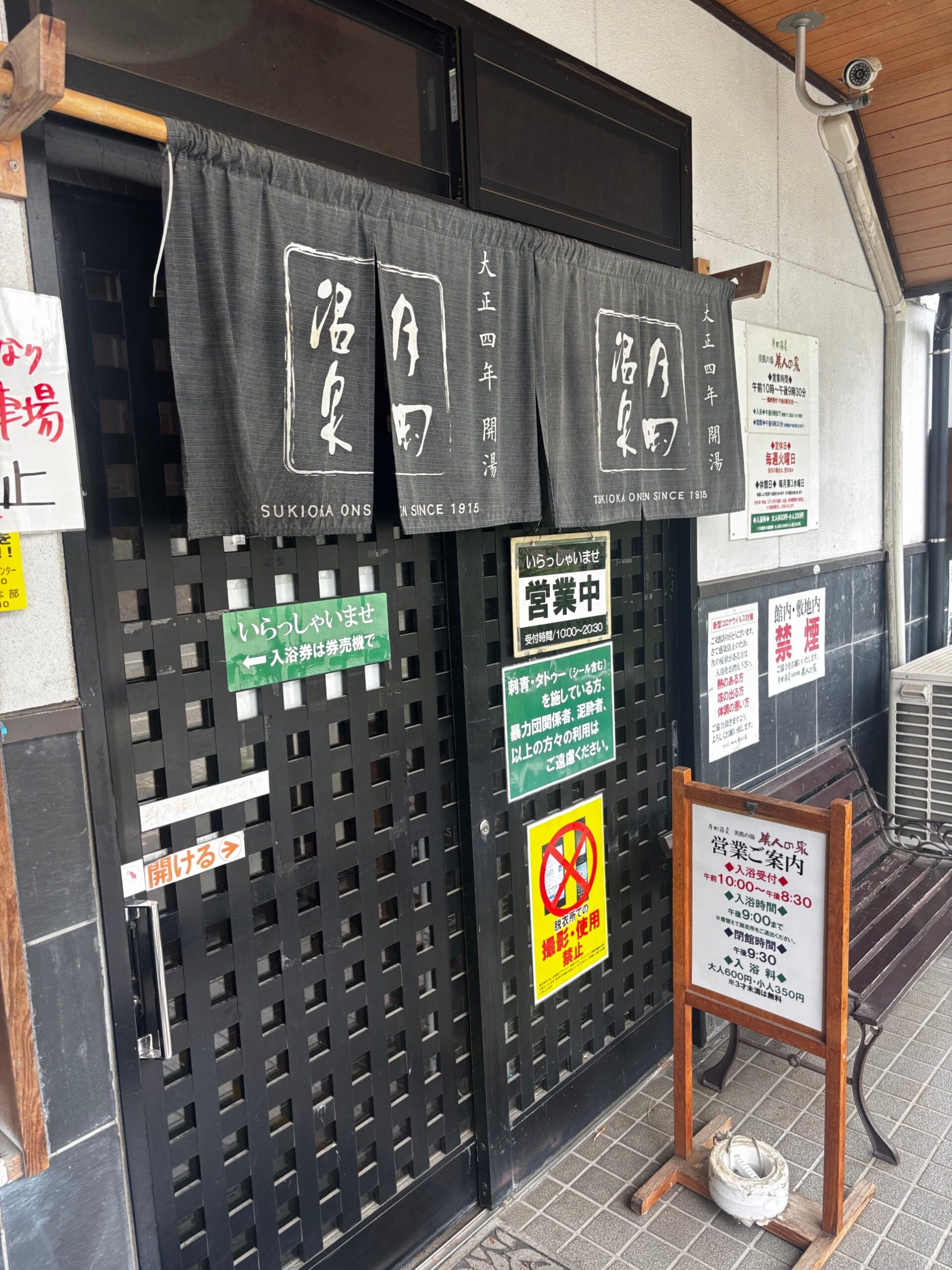
If you want to try Tsukioka’s water without staying overnight, Bijin-no-Izumi is the easiest option. It is a simple, no-frills bath that local people use too. The details below are from the notice at the entrance when I visited in June 2026. Prices and hours can change, so please check before you go.
| Reception | 10:00–20:30 (bathing until 21:00, building closes 21:30) |
| Price | Adults 600 yen / children 350 yen / free under 3 |
| Closed | Every Tuesday |
| Tickets | Buy a ticket from the ticket machine at the entrance |
| Address | 403-8 Tsukioka Onsen, Shibata, Niigata |
| Bus | About 4 minutes on foot from the “Tsukioka Kyuyu” bus stop |
- The notice says that people with tattoos, including tattoos covered with stickers, should not use the bath. If you have a tattoo, see the private bath options below
- Taking photos or using your phone in the changing room is not allowed
At the entrance to the town there is also a free footbath, “Ashiyu Yutarimi”, open to everyone. It uses 100% spring water straight from the source, and at night it is lit up with Japanese umbrellas. In winter it has wind shields, so you can soak your feet comfortably even when it is cold. Bring a small towel.
Where to stay
About 13 inns at Tsukioka use the hot spring water. Here are some options by budget and style, based on what I could confirm from official and tourism association information.
Shiratama no Yu Kahou Bettei Koshi no Sato (for a special occasion)
All 20 rooms are suites. It is the highest-grade of the three inns run by the same company (Senkei, Kahou and Koshi no Sato). Choose it for an anniversary or a quiet stay away from crowds.
Shiratama no Yu Kahou (a big resort-style inn)
A large inn with about 20,000 square meters of gardens and 129 rooms. You can enjoy its own spring, “Shiratama no Yu”, in six different baths. In the after-bath lounge, shrimp miso soup and ice cream are served free of charge.
Shiratama no Yu Senkei (the largest in town)
One of the biggest inns in Tsukioka. Breakfast is a Japanese and Western buffet with its famous “mochi buffet”. It also has private baths and a spa.
Tsukioka Onsen Mashu (a calm mid-sized inn)
38 rooms and four different open-air baths overlooking a Japanese garden. There is a plan that pairs the meal with sake chosen by a liquor shop that has been in Tsukioka since 1915.
Hotel Seifuen (good for travelers with tattoos)
Four large baths for men and women, plus three private baths you can reserve. Because you do not share a private bath with strangers, it is described as easy to use for guests with tattoos.
Shitashimi no Yado Toeikan (budget, room only)
Offers a room-only plan without meals, and the hot spring bath is open 24 hours. A convenience store is about a 1-minute walk away, with sushi restaurants and izakaya pubs nearby. A new open-air bath, “Tsuki no Yu”, opened in 2023. The private hot spring bath “Nagomi” costs 1,650 yen for 40 minutes.
Note: not every inn in town fills its large baths with hot spring water. For example, Fuurinya describes its large bath “Nyuhaku no Yu” as water made milky with bath additives. If you want Tsukioka’s real water, check before you book.
Walking the town and nearby sights
Tsukioka has been reinventing itself as “a hot spring town you want to walk around”. Inspired by the town’s 100th anniversary, young inn owners set up a company called “Mirise” and have opened about one new shop a year in empty storefronts. As of spring 2026 there are 12 shops.
- KURA: a sake shop with sake from almost every brewery in Niigata. You can taste about 100 kinds. Buy a set of three tokens for 600 yen and tell the staff the number on the bottle
- DEN: a rice cracker shop where you can grill your own senbei (about 30 minutes, 1,500 yen)
- KAORI: wines from Niigata wineries, with tastings for 300–900 yen
- UMAMI: pickles, miso, dashi and other Niigata flavors
- BEI: rice flour sweets, including rabbit-shaped “usagi-yaki”
- MINORI: smoothies and gelato (closed in winter)
- AMAMI (chocolate), NAGOMI (Japanese sweets and a matcha tea experience), IRU (coffee and canelés), TSUKIOKA ANN (bean paste sweets made with fruit), TAKUMI (Niigata crafts) and TSUKIOKA Donuts
Also look for “Tsukioka Brewery”, a craft beer brewery next to the footbath; “Tsukiakari no Niwa”, a free garden lined with lanterns that becomes magical in the evening; and Gensen no Mori, where the spring first appeared. At dusk you may even see Tsukioka’s geisha walking through town.
If you have more time, Shibata Castle, one of Japan’s 100 Fine Castles (about 20 minutes by car), and Shimizuen, a feudal lord’s garden (about 15 minutes by car), are worth a visit.
Food: Niigata’s “Italian”, rice and sake
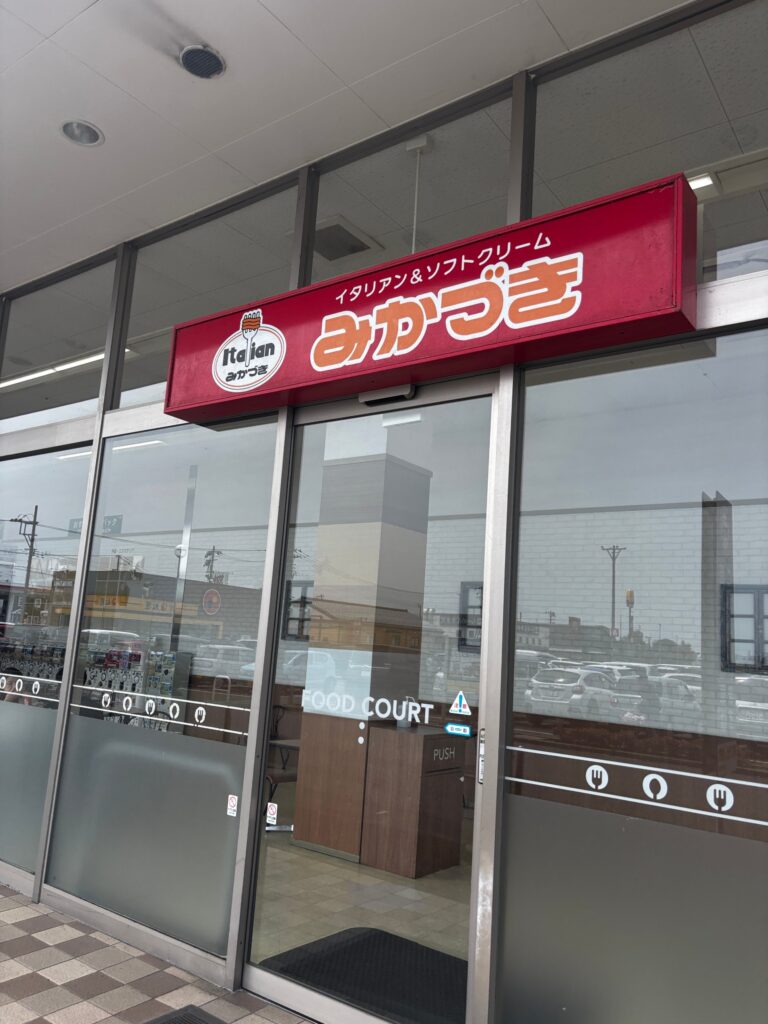
Near Tsukioka you can also find Mikazuki, the fast-food chain that serves Niigata’s famous local dish called “Italian”. I stopped by before my bath.
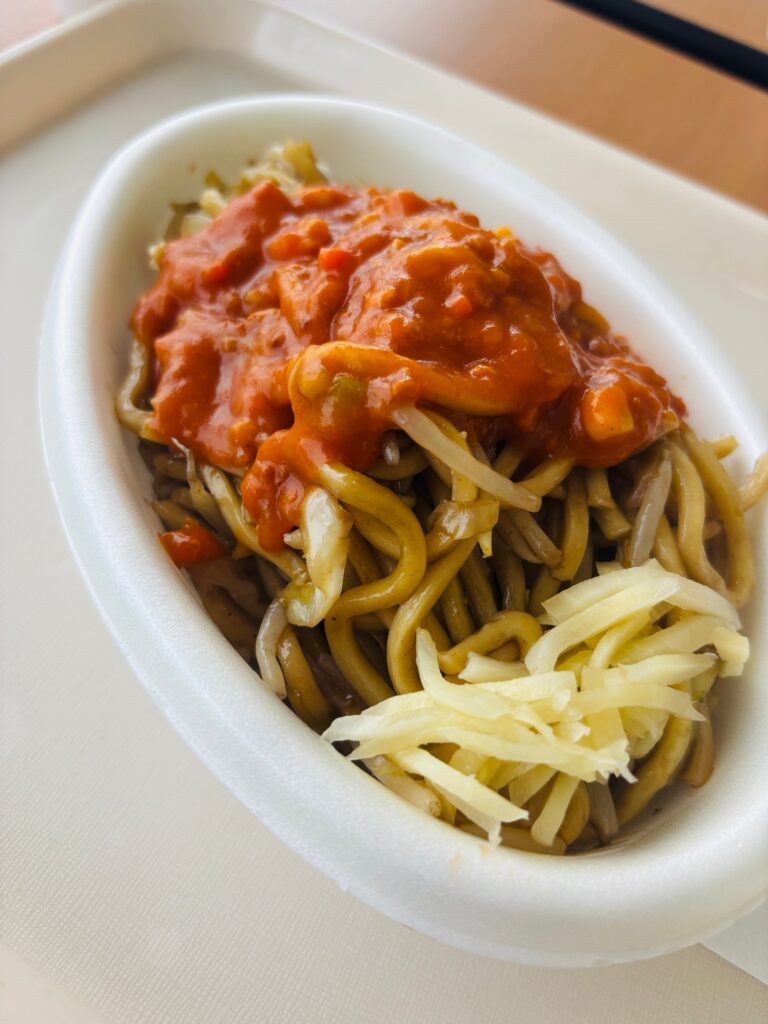
“Italian” is homemade thick noodles stir-fried with cabbage and bean sprouts in sauce, topped with tomato sauce and pickled white ginger. It is a Niigata local fast food born in Niigata City in 1960 and eaten with a fork. Despite the name, it is not Italian food but a kind of yakisoba. Mikazuki has branches mainly in Niigata City and also in Shibata, the city Tsukioka belongs to.
Niigata is famous for rice and sake, and visiting the sake and rice shops in town is part of the fun. Ryokan dinners also feature fish from the Sea of Japan and Niigata’s Koshihikari rice.
For vegan and vegetarian travelers
As far as I could find, no shop in Tsukioka advertises vegan options. Also, Japanese food that looks vegetable-only often uses bonito or dried sardine stock. These tips will help:
- If you stay at a ryokan, tell them your dietary needs when you book and ask what they can do
- When snacking around town, choose things with clear ingredients, such as fruit and vegetable smoothies or sake and wine tastings
- Useful Japanese phrases: “Niku, sakana, tamago, nyuseihin ga taberaremasen” (I can’t eat meat, fish, eggs or dairy), “Katsuo-dashi nuki de onegaishimasu” (No bonito stock, please), “Sakana wa haitte imasu ka?” (Does this contain fish?)
Tips for your visit
If you have tattoos
The Bijin-no-Izumi public bath does not accept guests with tattoos, even if they are covered. You can still enjoy Tsukioka’s water in these ways:
- Choose an inn with private baths you can reserve, such as Hotel Seifuen (check with the inn before booking)
- Book a room with its own open-air bath
- Soak your feet in the free “Ashiyu Yutarimi” footbath
Money, internet and language
- Bijin-no-Izumi tickets are sold from a ticket machine. Carry some cash in yen for small shops and ticket machines
- A translation app (such as Google Lens) helps a lot with signs and menus
Driving in winter
Niigata Prefecture asks drivers to use studless winter tires and carry tire chains on winter roads. Tsukioka is on the plain, but snow and icy roads still happen, so rent a car with winter tires.
Bathing manners
- Rinse with hot water and wash your body before getting into the bath
- Do not put your towel in the bath water
- The floor is slippery, so walk slowly
- A public bath is part of local daily life. Keep your voice down
Getting there
- From Tokyo by train: Joetsu Shinkansen to Niigata Station, JR Hakushin Line to Toyosaka Station, then the shuttle bus. About 3 hours in total
- From Niigata Station: a direct bus to Tsukioka Onsen takes about 60 minutes
- From Toyosaka Station: shuttle bus, about 20–25 minutes. For Bijin-no-Izumi, get off at “Tsukioka Kyuyu” and walk about 4 minutes
- From Niigata Airport: about 35 minutes by car
- By car: about 15 km from Yasuda IC (Ban-etsu Expressway) or about 20 minutes from Toyosaka-Niigata-Higashiko IC (Nihonkai-Tohoku Expressway). About 4 hours from Tokyo
Sources
- Niigata Prefecture Tourist Association: Bijin-no-Izumi public bath (Japanese)
- Niigata Prefecture Tourist Association: Italian (Mikazuki) (Japanese)
- Niigata Prefecture Tourist Association: Mirise concept shops, part 1 (Japanese)
- Niigata Prefecture Tourist Association: Mirise concept shops, part 2 (Japanese)
- Niigata Prefecture Tourist Association: Tsukioka Onsen inns from Niigata Airport (Japanese)
- Niigata Prefecture Tourist Association: drinking the “worst-tasting” spring water (Japanese)
- Niigata Prefecture Tourist Association: Tsukioka Onsen Mashu (Japanese)
- Niigata Prefecture Tourist Association: Shiratama no Yu Senkei (Japanese)
- Rurubu & more: Tsukioka Onsen (Japanese)
- Mapple: Tsukioka Onsen spots (Japanese)
- GOOD LUCK TRIP: Tsukioka Onsen
- Nippon Travel Agency: Tsukioka Onsen (Japanese)
- Japan Ryokan & Hotel Association: Tsukioka Onsen (Japanese PDF)
- JTB: Shiratama no Yu Kahou (Japanese)
- Japanese Onsen: Hotel Seifuen
- Shitashimi no Yado Toeikan booking page (Japanese)
- Kinki Nippon Tourist: Tsukioka Onsen Fuurinya (Japanese)
- Tokyo Metropolitan Government: benefits by spring type (Japanese)
- Nifty Onsen: types of hot springs (Japanese)
- Niigata Prefecture: safe driving on winter roads (Japanese)
- Notice at the Bijin-no-Izumi entrance (photographed June 2026)